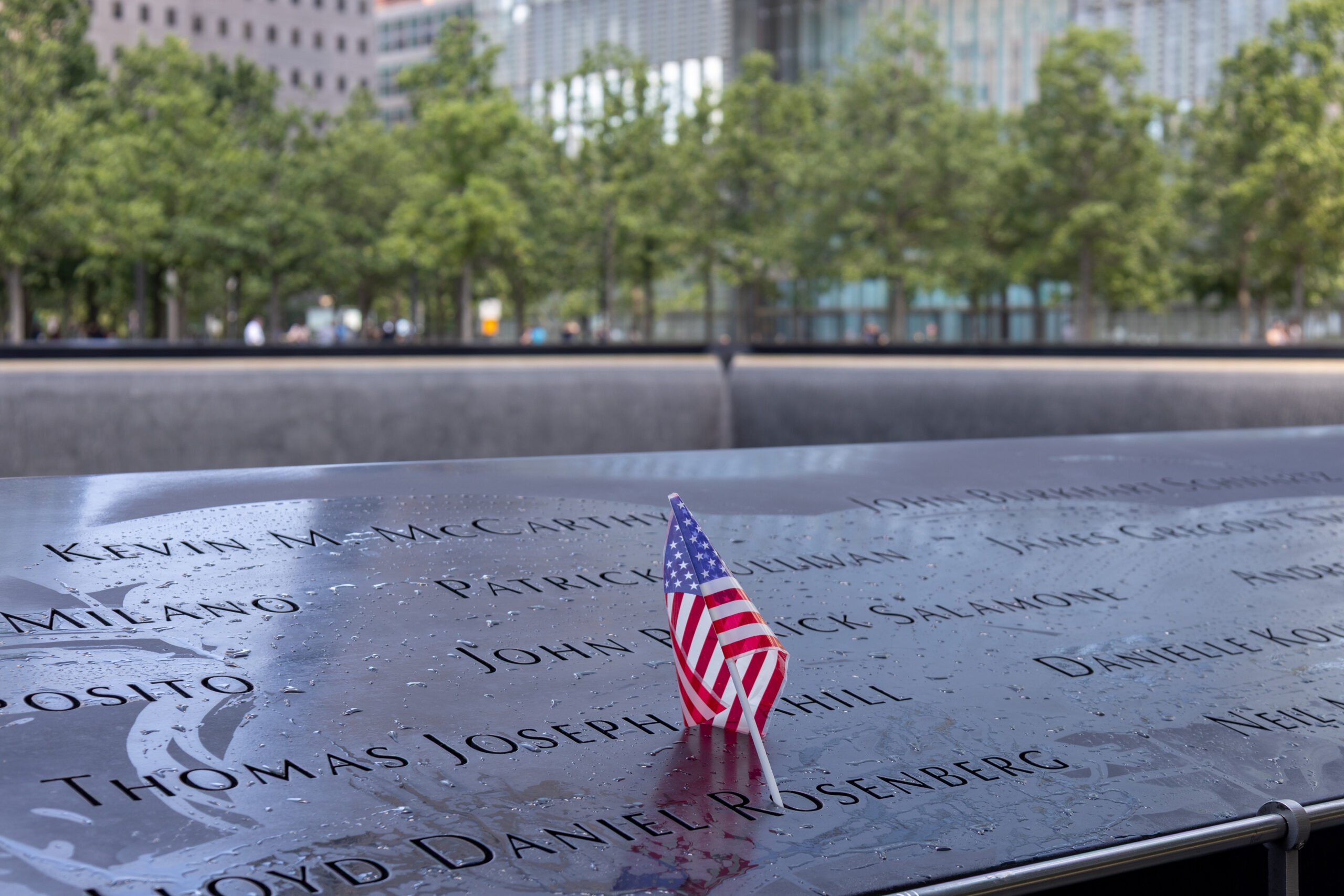
I do not remember September 11th as a news story. I remember it as a smell in the air, as faces I will never forget. I was there during the rescue and recovery efforts at Ground Zero. I went in because I love my country. Because it is in my nature to help people and because that is what you do when your city is bleeding. I did not stop to think about what it might cost me later. None of us really did.
Walking Into a War Zone
When I first got down there, it looked like a nightmare that had spilled into real life. The skyline was torn open. The streets were full of dust and paper and silence that felt louder than any siren. Men and women – from every walk of life, branch of the military, and law-enforcement – were moving with purpose, digging, lifting, calling out, praying. The air was thick. You could taste it. We were breathing things we should not have been breathing, but at the time it did not matter. We were focused on finding someone alive. We were focused on bringing someone home.
Every day blended into the next. The work was heavy and relentless. We carried steel and concrete. We climbed over wreckage that was still hot. We searched through places that did not even look like places anymore. Sometimes we found what we were looking for. Sometimes we did not. Either way, we kept going.
The Things You Carry Home
People talk about the bravery of First Responders, and I appreciate the respect, but I want to be honest about something. Bravery does not mean you do not feel fear. It means you do the job even when your hands shake. It means you see what is in front of you and you keep moving anyway.
What I carried home was not only the images. It was the sound of workers calling out names into the rubble. It was the look on a firefighter’s face when hope faded but he stayed on his knees searching anyway. It was the way the dust stuck to the sweat on your skin and you could not wash it off completely no matter how hard you tried.
When I did finally go home after many nightshifts, I would sit quietly and just stare at the wall. I did not want to talk. I did not want to eat. I thought I was just tired. I told myself I would snap back once the recovery ended. A lot of us did that. We pushed feelings aside because there was no room for them in the middle of that disaster. I remember my neighbors who knew I was a first responder at Ground Zero often coming up to me and saying, “Thank you for your service.” Many of them told me it was no different than serving in the armed forces. In many ways, it was. I am permanently injured while answering the call to help the country that I love, during one of its darkest moments and greatest need.
Over the years, I received countless letters of gratitude from public officials, governors, senators, mayors, members of the New York City Council, and even a letter from Washington, D.C. calling me a hero and thanking me for my sacrifice. I have never seen myself as a hero. I simply did what I believed was right for the country I grew up in and deeply love.
Despite my deteriorating health, I walked with a cane now. I would make the same choice again without hesitation. Serving my country was never a question, it was an obligation of the heart. The only thing I would do differently is wear my mask while working at Ground Zero. That single decision changed my life forever.
The Hidden Toll
The physical toll did not show up right away. It came later, slowly. A cough that would not go away. Breathing that felt tighter than it used to. A body that got tired faster. I tried to ignore it. I was used to working hard. I had spent my life in tough jobs, including decades as a Theatrical Teamster on film and TV sets. Hard work was normal. But this was different. This was my body telling me something was wrong.
Then the deeper stuff started hitting me. Sometimes it was in dreams. Sometimes it was in the middle of the day for no reason at all. I would be doing something simple, and suddenly I was back there again. I could feel the dust in my chest. I could hear the sirens. I could smell the smoke.
There is a kind of trauma that does not announce itself. It just settles in your bones. It makes you quieter. It makes you angry without knowing why. It makes you pull away from people you love because you do not want to drag them into your pain.
Trying to Get Help
When I finally admitted I needed help, I learned how hard it can be to get it. First Responders are honored in ceremonies, but care is not always easy to reach. Paperwork takes time. Proof is demanded like you are on trial. Some doctors understand. Some do not. The system can feel cold when you are living with something that is very personal.
Health programs exist, and I will say that clearly because I do not want to dismiss the people who work inside them. There are good people fighting for us. But a lot still falls short. The process can be slow. The mental health side can be treated like an afterthought. I wake up from nightmares, thinking that 9/11 was happening all over again and that I was working on “the Pile.” Many of us do not want to admit we are struggling mentally, so we wait too long. Others get tired of pushing through red tape and they stop trying. The free health care that we received would not be possible without the help and approval of congress and the senate. So I thank them immensely. I thank Jon Stewart, for advocating for us first responders.
Someone should not have to feel like a beggar for care when they were willing to risk everything for strangers.
What Healing Looks Like Now
Healing for me has not been a straight line. Some days I feel steady. Some days I do not. I have learned to respect the waves instead of fighting them. I have learned that asking for help is not a weakness. It is survival.
Filmmaking has helped me. I spent years on sets, especially my long stretch with Law & Order SVU. I watched how stories get built, how truth can be shaped into something people can hold. Eventually, I wrote, directed and produced my own film, Up In Harlem. Creating that movie let me put pieces of myself somewhere outside my body. It gave me purpose. Purpose matters when you are trying to live with pain.
I also do outreach work for homeless and needy people. That keeps me grounded. When you have been through something like Ground Zero, you understand that life can change in a second. Giving time to people who are struggling reminds me that we still owe each other kindness.
What Still Needs to Change
We need more than praise. We need better long-term health care for First Responders, especially those dealing with toxic exposure. We need intensive mental health support that is easy to access and treated as just as real as physical injury. We need a system that believes people without forcing them to prove their suffering over and over.
We also need to keep telling the truth about what happened and what it continues to do to people. The story of 9/11 is not over because the smoke cleared. It is still in our lungs. It is still in our nightmares. It is still in the empty seats at family tables.
Life As It Remains
I do not regret being there. I would still go. I went because it was my city, and because people needed help, and because sometimes you find out who you are when things fall apart.
But I want the world to understand that the aftermath lives on. It lives in people like me and in thousands of others who are still fighting to breathe, still fighting to sleep, still fighting to be seen.
If you know a First Responder from that time, check on them. Listen to them. And if you are someone carrying your own Ground Zero inside you, please hear me clearly. You are not alone. And you deserve real support, not just words.